Assistance
Consultation
Services
Opinion
Care Coordination
What will your treatment cost?
Insomnia: Causes, Symptoms, Diagnosis and Treatment in India
Released Date: 2026-11-08
Sleep health guide • Sleep medicine, psychiatry & neurology
Insomnia means you cannot fall asleep, cannot stay asleep or wake up too early - even when you have the time and a comfortable place to sleep - and you feel tired the next day. It is very common and it is treatable. This picture guide explains the problem and the solution in simple words.
★ At a glance
7-9 hours
sleep most adults need each night (NHS, Mayo Clinic)
3 nights a week
or more, for over 3 months = chronic insomnia (NHLBI)
About 10%
of adults have chronic insomnia disorder (AASM)
Up to 1 in 3
people worldwide have insomnia at some point (Sleep Foundation)
6-8 weeks
typical length of a CBT-I programme (NHLBI)
1-2 weeks
of sleep diary before your doctor visit (NHLBI)
Almost everyone has a bad night now and then. Insomnia is different: the poor sleep keeps happening, and it starts to affect your energy, mood, work and health. Many people try to cope with tea, coffee or sleeping tablets bought without advice, which can make things worse. The good news is that doctors now have a clear, step-by-step way to treat insomnia - and the first-choice treatment is not a pill.
Satyug Healthcare helps patients from Africa, the Middle East and Central Asia get an opinion from sleep medicine, psychiatry, neurology and pulmonology specialists at accredited hospitals in India, and arranges the whole visit if tests such as a sleep study are needed.
● In simple words
Your brain has a sleep switch and a body clock. Stress, worry, late screens, caffeine, shift work, pain or another illness can keep the "awake" switch turned on at night. After a few bad nights, many people start to worry about sleep itself - and that worry keeps them awake even more. Treatment works by finding what keeps the switch on, retraining the brain to link the bed with sleep, and calming the worry.
❓What Is Insomnia?
The US National Heart, Lung, and Blood Institute (NHLBI) describes insomnia as a common sleep condition in which a person has trouble falling asleep, staying asleep or getting good-quality sleep, even when there is enough time and a suitable place to sleep. It often leads to sleepiness and poor functioning during the day.
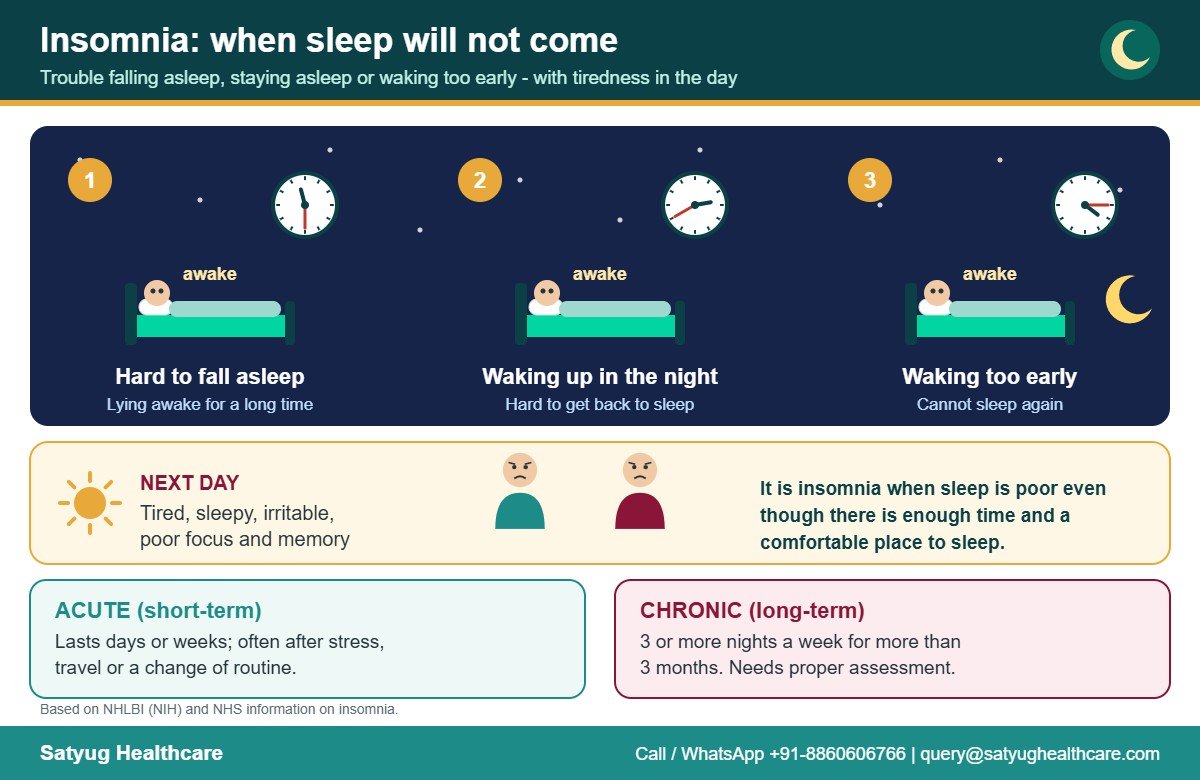
▲ Picture at the top of this page: the three night-time patterns of insomnia, how it shows up the next day, and acute vs chronic insomnia.
Acute vs chronic insomnia
| Type | How long it lasts | Usual triggers | What it usually needs |
|---|---|---|---|
| Acute (short-term) | A few days or weeks; under 3 months | Stress, a distressing event, travel, a change of routine or surroundings | Good sleep habits; the cause often settles; see a doctor if it does not |
| Chronic (long-term) | 3 or more nights a week for more than 3 months | Often several causes together; may be linked to another health problem or medicine | Medical assessment, CBT-I, treatment of any underlying cause |
Sources: NHLBI (NIH); NHS; Mayo Clinic; Indian Psychiatric Society clinical practice guidelines (2017).
What normal sleep looks like
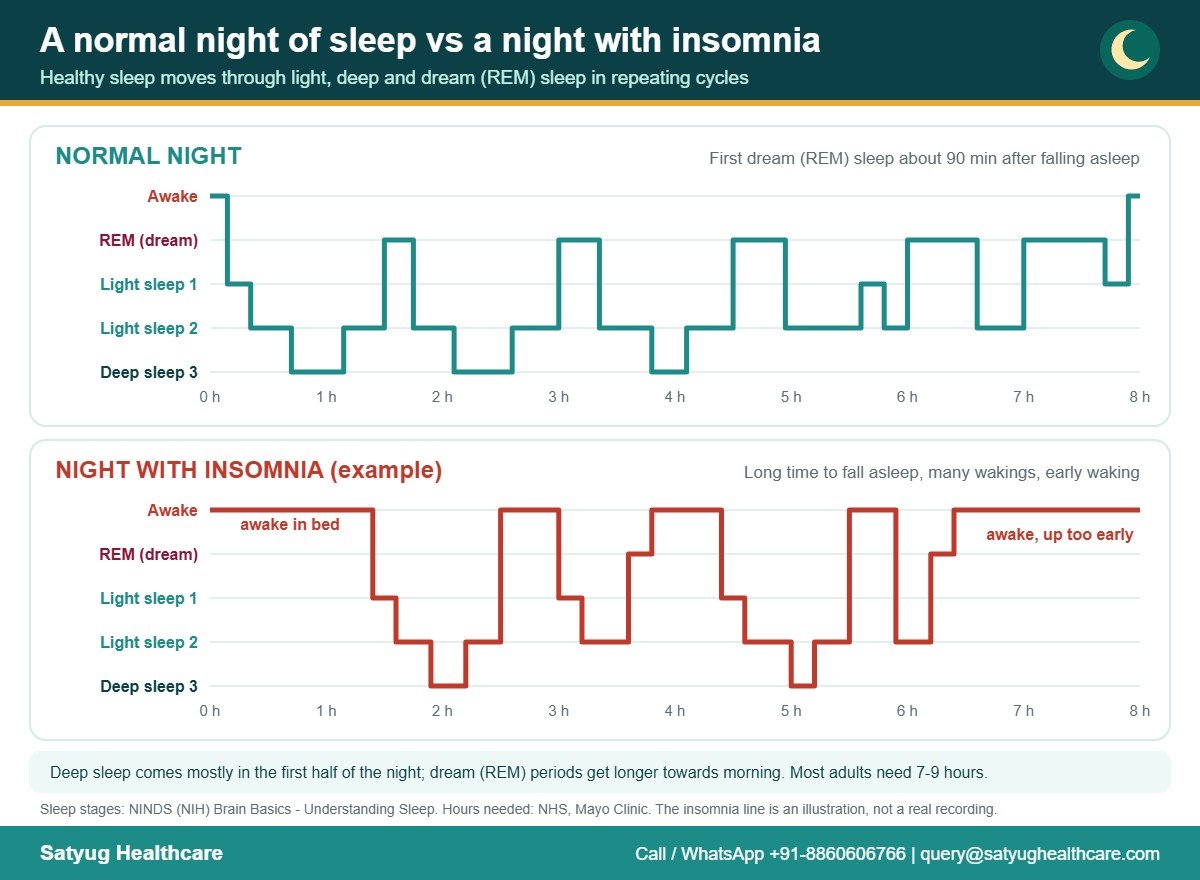
Healthy sleep is not one long, flat state. The brain moves through three stages of non-REM sleep (from light to deep) and then REM ("dream") sleep, and repeats this cycle several times a night. The first REM period usually comes about 90 minutes after falling asleep, deep sleep is longest in the first half of the night and REM periods get longer towards morning (NINDS, NIH). In insomnia this pattern is broken up by long periods awake.
⚠Symptoms of Insomnia
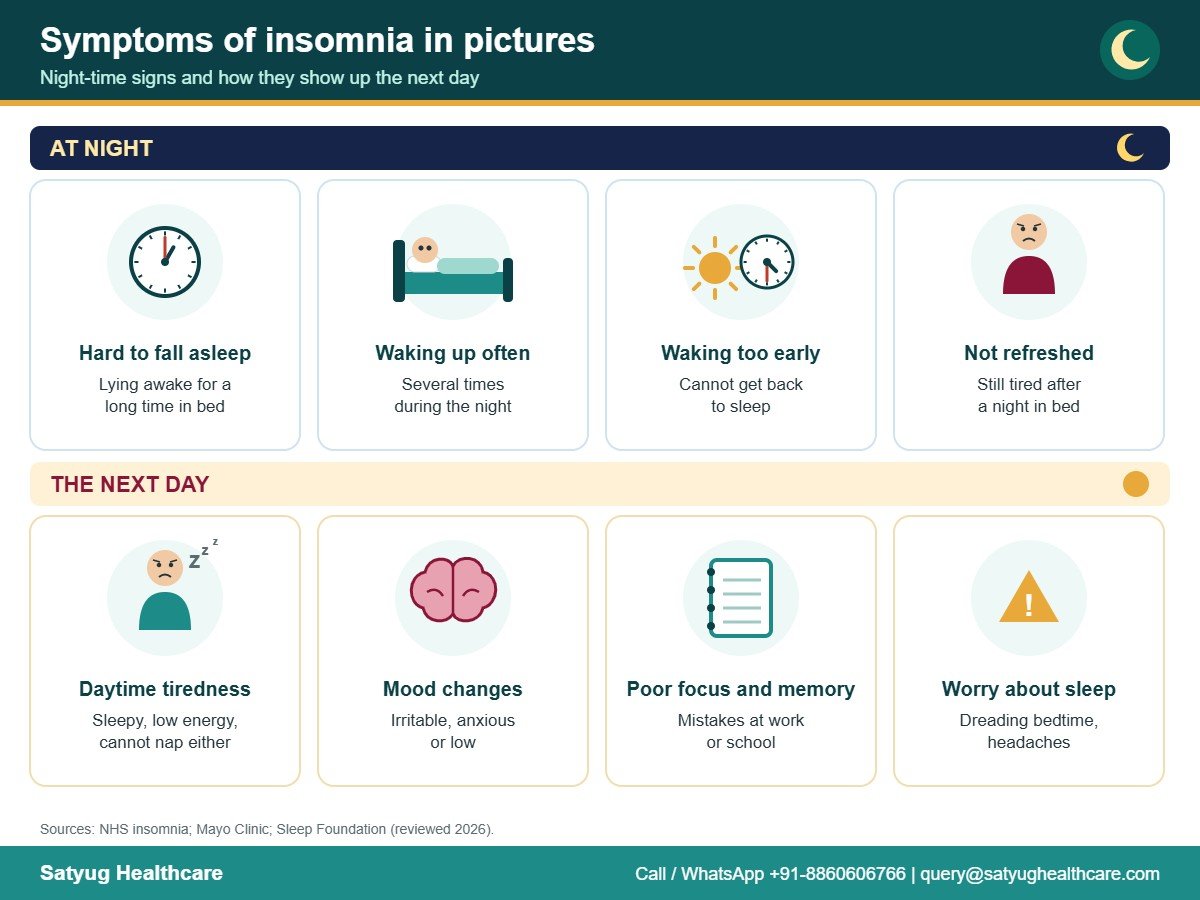
☾
Hard to fall asleep
Lying awake for a long time after going to bed.
⏱
Waking up often
Waking several times in the night and lying awake.
☀
Waking too early
Waking early in the morning and not getting back to sleep.
☹
Not refreshed
Still feeling tired after a night in bed; unable to nap even when tired.
⚡
Daytime effects
Irritability, low energy, poor concentration and memory.
⚠
Worry about sleep
Dreading bedtime; some people also have headaches.
Sources: NHS; Mayo Clinic; Sleep Foundation.
⚙Causes and Risk Factors
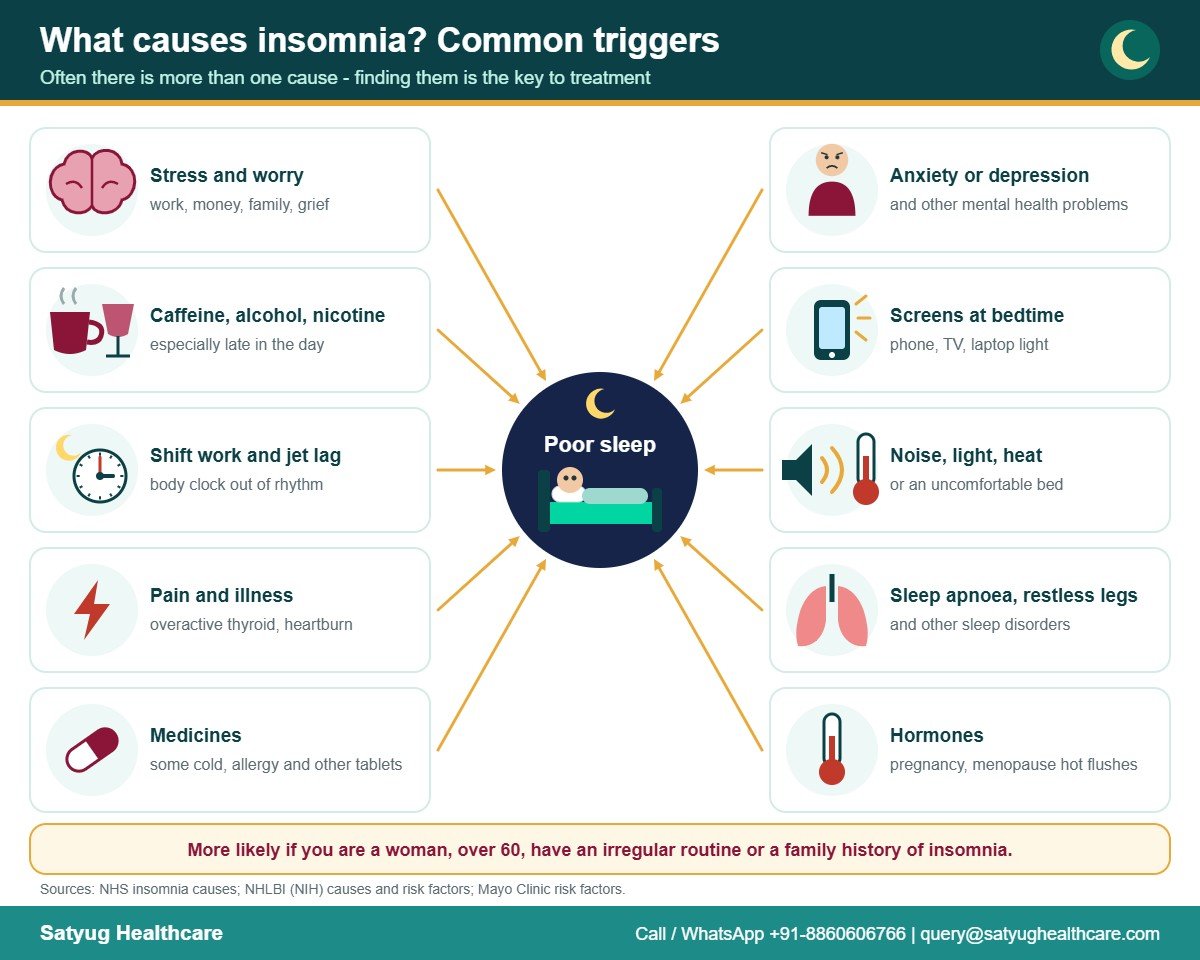
| Group | Examples |
|---|---|
| Stress and mental health | Worry about work, money, relationships or a loss; anxiety; depression; bipolar disorder |
| Habits and lifestyle | Caffeine, alcohol, nicotine or drugs; screens before bed; long daytime naps; little daytime activity; irregular sleep times |
| Body clock problems | Night or rotating shift work; jet lag from travel across time zones |
| Bedroom | Noise, light, a room that is too hot or cold, an uncomfortable bed |
| Health conditions | Long-term pain; overactive thyroid; menopause; Parkinson's disease; Alzheimer's disease |
| Other sleep disorders | Sleep apnoea, restless legs syndrome, narcolepsy, nightmares |
| Medicines | Many medicines can disturb sleep, including some cold and allergy medicines - ask your doctor before stopping any medicine |
● Who is more likely to get insomnia
- Women - hormone changes in the menstrual cycle, pregnancy and menopause (night sweats and hot flushes) can disturb sleep
- People over 60, as sleep patterns and health change with age
- People with a mental or physical health condition, or under a lot of stress
- People with an irregular schedule - shift work or frequent travel
- People with a family history of insomnia
Sources: NHS; NHLBI (NIH); Mayo Clinic.
♥How Insomnia Affects Your Health
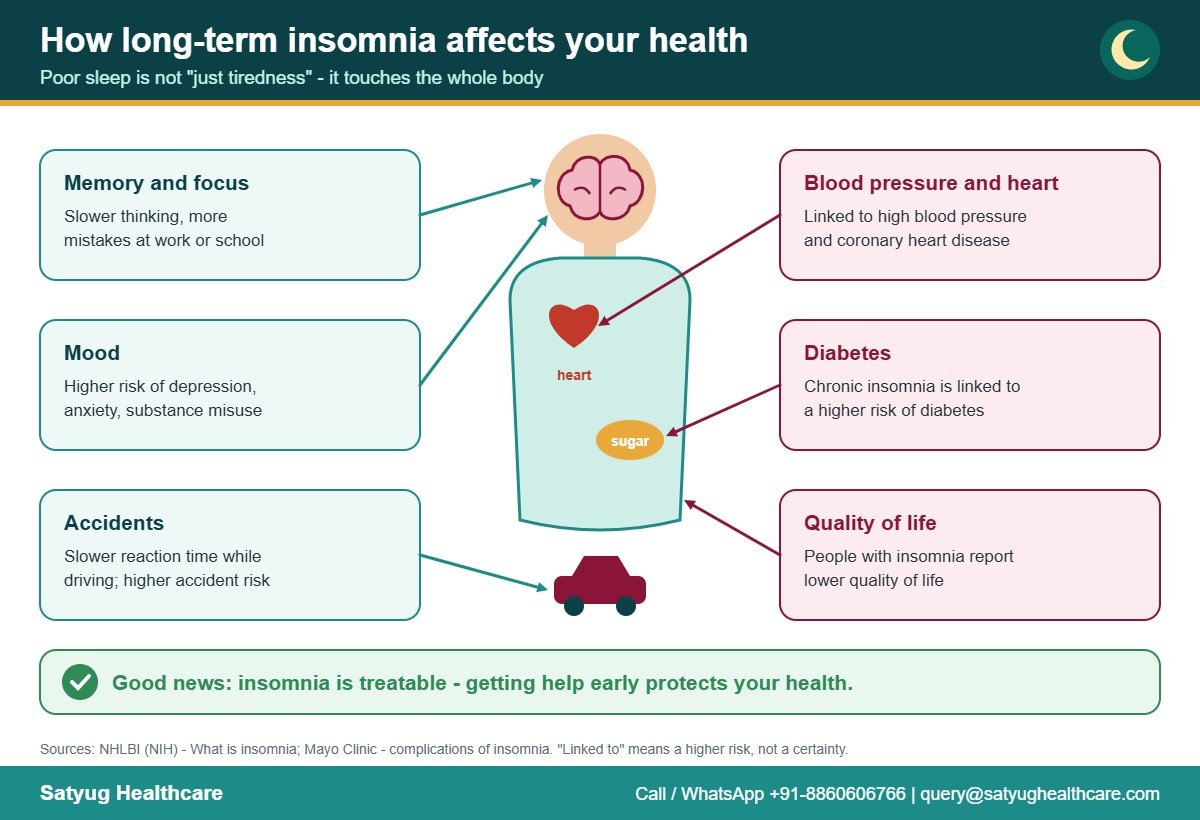
- Brain: memory and concentration problems, daytime sleepiness, lower performance at work or school.
- Mood: higher risk of depression, anxiety and substance misuse.
- Safety: slower reaction time while driving and a higher risk of accidents.
- Long-term health: chronic insomnia is linked to a higher risk of high blood pressure, coronary heart disease and diabetes (and, in NHLBI's summary, cancer).
- Quality of life: people with insomnia report a lower quality of life than people who sleep well.
"Linked to" means the risk is higher - it does not mean these problems will happen. Sources: NHLBI (NIH); Mayo Clinic.
⚠ See a doctor if
- changing your sleep habits has not helped, or you have had trouble sleeping for weeks or months
- poor sleep makes it hard to cope with daily life, work or study
- you feel too sleepy to drive safely - do not drive when sleepy
- you or your partner notice loud snoring, gasping or pauses in breathing at night (possible sleep apnoea)
- you have low mood, constant worry or panic, or thoughts of harming yourself - seek help the same day
- you are relying on sleeping pills, alcohol or over-the-counter sleep aids
✎How Is Insomnia Diagnosed?
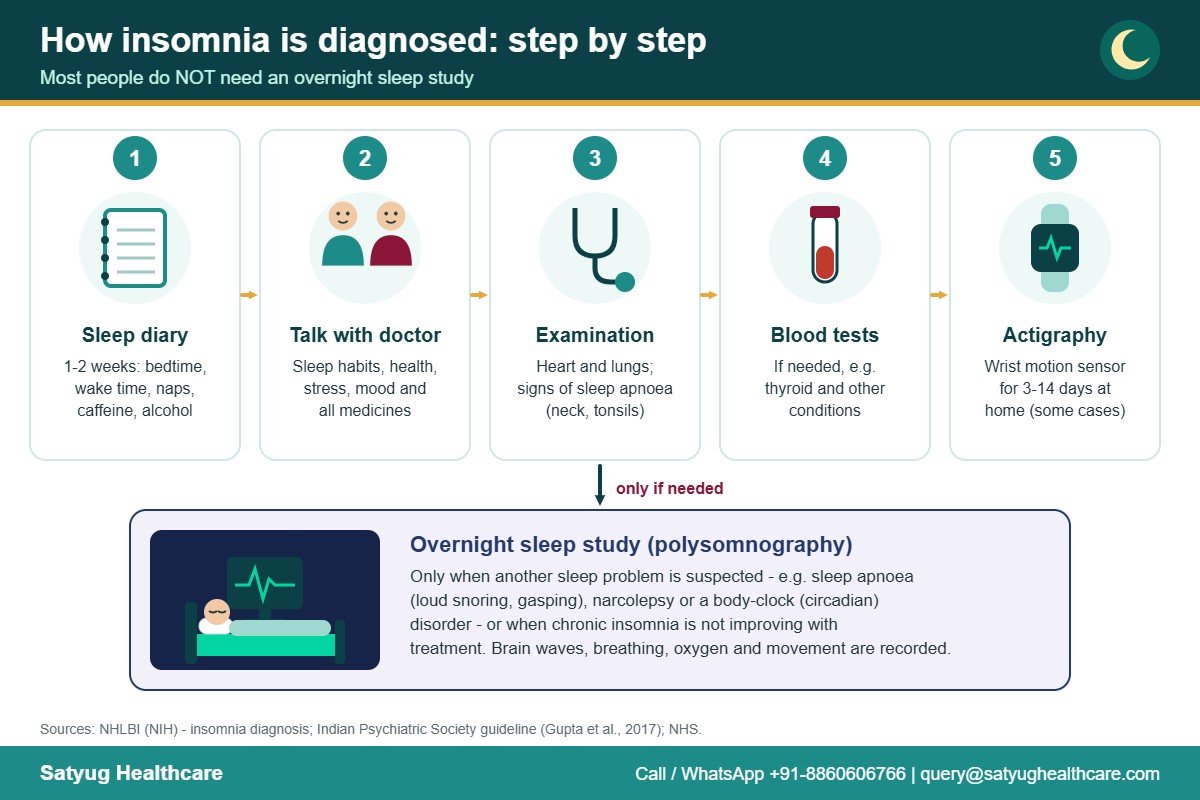
Keep a sleep diary for 1-2 weeks
Write down when you go to bed, fall asleep and wake up, any naps, caffeine and alcohol, exercise and how sleepy you feel in the day. Bring it to your appointment.
Talk with the doctor
About your sleep habits, stress and mood, other illnesses, all medicines and supplements, and alcohol or other substances.
Physical examination
Checks of the heart and lungs and signs of sleep apnoea, such as large tonsils or a large neck size.
Blood tests if needed
For example to check the thyroid or other conditions that can affect sleep.
Actigraphy in some cases
A small wrist sensor worn at home for 3-14 days records periods of rest and activity.
Overnight sleep study (polysomnography) only when needed
Used to look for other sleep problems such as sleep apnoea, narcolepsy or body-clock (circadian) disorders, or when chronic insomnia is not improving with treatment.
Most people with insomnia can be diagnosed from their history and sleep diary and do not need an overnight sleep study. Sources: NHLBI (NIH); Indian Psychiatric Society guidelines (2017).
✚Treatment: Step by Step
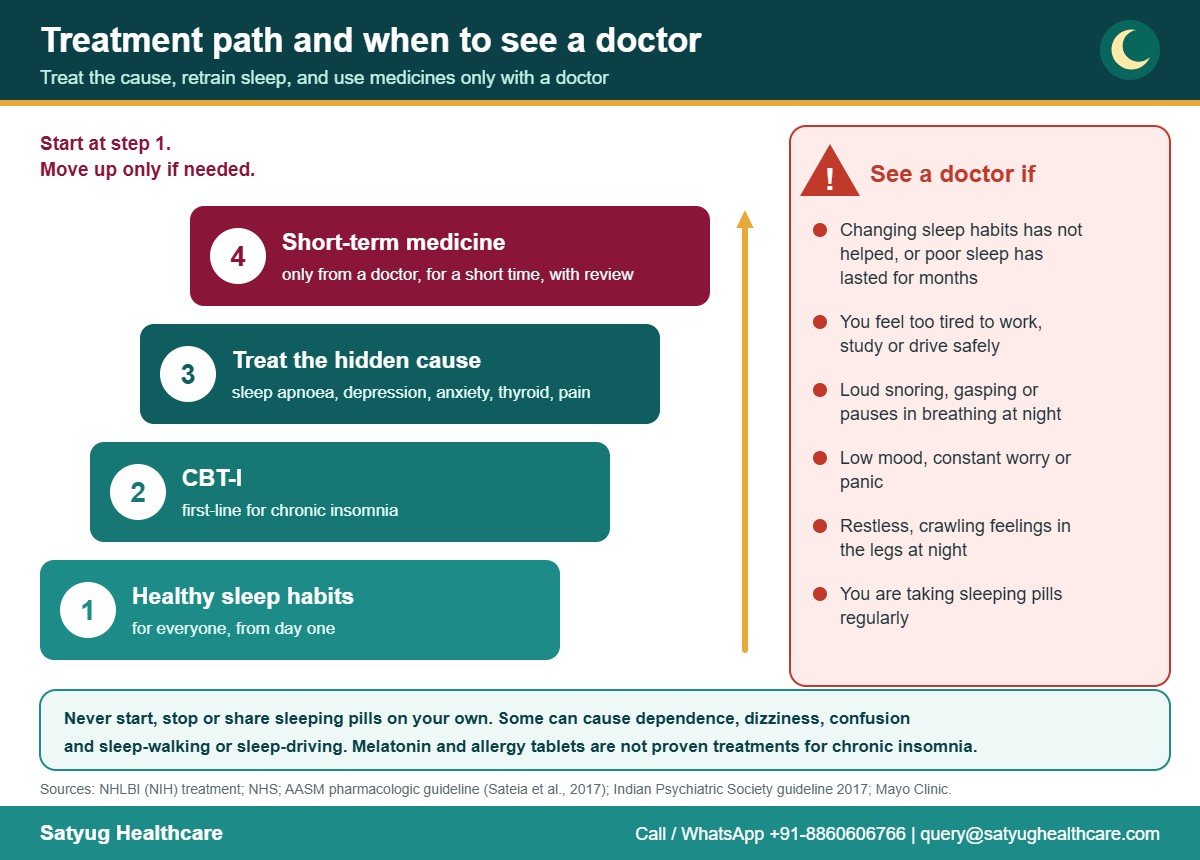
| Treatment | What it does | Who it is for | Points to know |
|---|---|---|---|
| Healthy sleep habits | Supports a steady body clock and a calm bedtime | Everyone | Helpful, but not enough on its own for chronic insomnia (AASM) |
| CBT-I | Retrains sleep and calms worry about sleep | Chronic insomnia - first choice | Usually 6-8 weekly sessions; in person, by phone or online |
| Treating the underlying cause | Removes what keeps you awake | Sleep apnoea, depression, anxiety, thyroid problems, pain | Sleep often improves when the cause is treated |
| Prescription sleep medicine | Helps sleep for a short time | Severe or short-term insomnia, or when CBT-I is not possible or not enough | Only under a doctor, usually short-term, with regular review |
1. Cognitive behavioural therapy for insomnia (CBT-I)
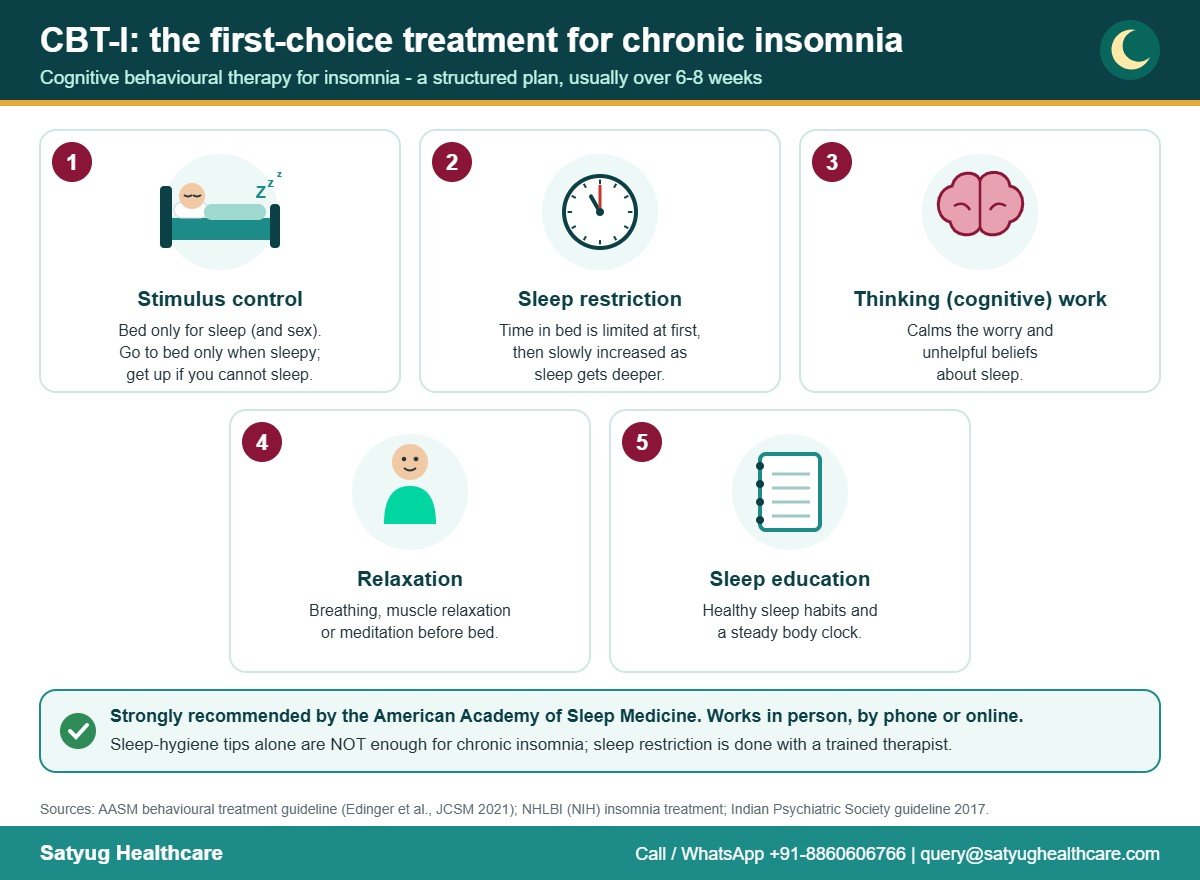
CBT-I is the recommended first treatment for long-term insomnia. The American Academy of Sleep Medicine (AASM) gives it a strong recommendation, and the Indian Psychiatric Society guidelines also prefer CBT-I for chronic insomnia. It is a structured plan, usually over 6-8 weeks, with a doctor, psychologist, nurse or trained therapist. It can be done in person, by phone or online. Its parts are:
- Stimulus control: use the bed only for sleep (and sex), go to bed only when sleepy, and get up if you cannot sleep.
- Sleep restriction: time in bed is limited at first to match the time you actually sleep, then slowly increased as sleep gets deeper. This is done with a therapist's guidance.
- Cognitive therapy: changing worries and unhelpful beliefs about sleep.
- Relaxation: breathing exercises, muscle relaxation or meditation.
- Sleep education: healthy sleep habits and how the body clock works.
2. Healthy sleep habits (sleep hygiene)
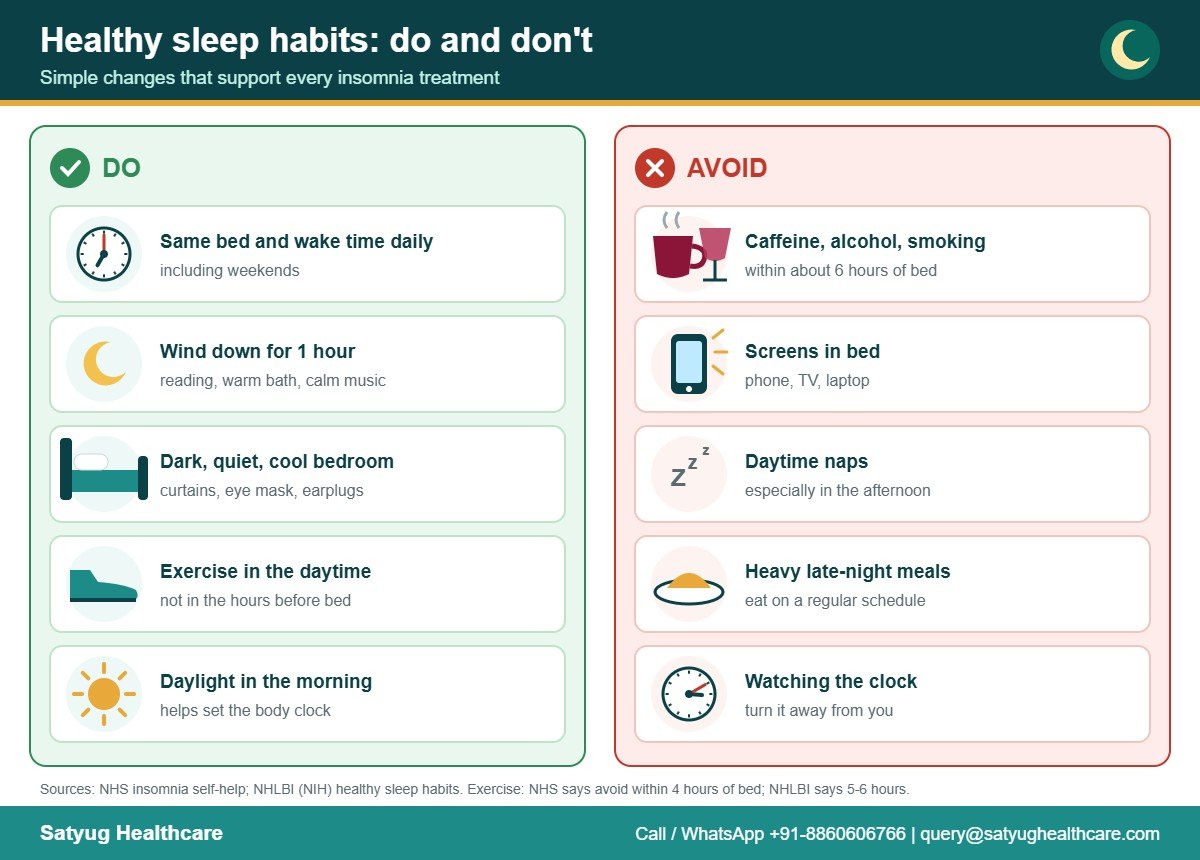
Do
- ✔ Go to bed and wake up at the same time every day, including weekends
- ✔ Wind down for about an hour before bed
- ✔ Keep the bedroom dark, quiet, cool and comfortable
- ✔ Exercise regularly - in the daytime
- ✔ Eat meals at regular times
Avoid
- ✖ Caffeine, alcohol and smoking within about 6 hours of bedtime (NHS)
- ✖ Phones, TV or laptops right before bed
- ✖ Daytime naps, especially in the afternoon
- ✖ Large meals late at night, or exercise close to bedtime
- ✖ Driving when sleepy
Note: the NHS advises no exercise within 4 hours of bedtime; the NHLBI suggests finishing exercise 5-6 hours before bed. Alcohol may help you fall asleep but makes sleep lighter later in the night (NHLBI).
3. Treating the underlying cause
●
Sleep apnoea
Loud snoring and pauses in breathing need a sleep study and treatment by a sleep or chest (pulmonology) specialist.
●
Depression and anxiety
Treated by a psychiatrist or psychologist; sleep often improves as mood improves.
●
Thyroid and hormones
An overactive thyroid or menopause symptoms can be checked and treated.
●
Pain and other illness
Better control of pain, heartburn or other conditions helps sleep.
●
Restless legs and body-clock disorders
Assessed by a neurologist or sleep specialist.
●
Medicines
Your doctor can review medicines that may be disturbing sleep. Do not stop a medicine on your own.
4. Medicines - only under a doctor
Medicines can help some people for a short time, but they are not the first choice for chronic insomnia. The NHS says doctors rarely prescribe sleeping pills, and usually only for a few days or weeks at most, because of the risk of serious side effects and dependence. The Indian Psychiatric Society guidelines say drug treatment is mainly for short-term insomnia and is not routinely recommended for chronic insomnia. The general groups of medicines a doctor may consider are:
- Benzodiazepine receptor agonists ("Z-drugs")
- Melatonin receptor agonists
- Orexin receptor antagonists
- Benzodiazepines - usually only when others fail, and for a few weeks, because they can be habit-forming
- Some antidepressants and other medicines used "off-label" in selected people
⚠ Important safety points
- Never start, stop, change the dose of or share a sleeping medicine without your doctor.
- Some sleep medicines can cause dizziness, confusion, falls, and rarely sleep-walking or sleep-driving. Do not combine them with alcohol.
- Melatonin supplements are not proven to work for insomnia (NHLBI), and the AASM suggests that doctors do not use melatonin or diphenhydramine-type antihistamine sleep aids for chronic insomnia.
- Pharmacy sleep aids should only be used for a short time (the NHS says 1-2 weeks) - check with a doctor first.
✔ Good news
Insomnia is treatable. Most people do not need long-term sleeping pills: a clear diagnosis, CBT-I and treatment of any hidden cause are the backbone of modern insomnia care.
✈Insomnia and Sleep Disorder Care in India
✔
Sleep medicine teams
Large private hospitals in Delhi NCR and other cities have pulmonology and sleep medicine, psychiatry and neurology departments working together.
✔
Sleep studies when needed
Overnight sleep studies (polysomnography) can be arranged at accredited hospitals when another sleep disorder is suspected.
✔
One trip, full assessment
Consultation, blood tests, sleep study if needed and specialist review can be planned together.
✔
Help in your language
Satyug coordinators speak English, Arabic, French and Portuguese.
Cost of insomnia assessment and sleep study in India
The cost depends on the hospital, the tests needed (for example blood tests or an overnight sleep study) and how many follow-up sessions are planned. We do not publish a fixed price for insomnia care. Contact the Satyug helpdesk for a free, personalised estimate from 2-3 hospitals.
Specialists on our website
These sleep medicine and pulmonology specialists have profiles on satyughealthcare.com:
- Dr. Prashant Saxena - Respiratory Diseases, Critical Care and Sleep Medicine, Artemis Hospitals, Gurugram
- Dr. Gopi Chand Khilnani - Pulmonary, Critical Care and Sleep Medicine, PSRI Hospital, New Delhi
- Dr. Neetu Jain - Pulmonary, Critical Care and Sleep Medicine, PSRI Hospital, New Delhi
For insomnia linked to anxiety, depression or neurological problems, our team can also arrange an opinion from a psychiatrist or neurologist.
☎How Satyug Healthcare Helps
Send your details
How long you have had poor sleep, your sleep diary if you have one, other illnesses, all medicines (including sleeping tablets), any previous sleep study, and snoring or breathing pauses noticed by a partner.
Free opinion and estimate
We share your details with suitable specialists and send you their opinion and a cost estimate.
Choose your hospital and doctor
We help you compare specialists, tests and the total budget.
Medical visa and travel
The hospital issues a visa invitation letter; we help with the e-Medical visa, airport pick-up and stay near the hospital.
Assessment and treatment
Your coordinator stays with you through consultations, tests and the treatment plan.
Follow-up at home
Online follow-up can continue after you go home, which suits CBT-I sessions.
❓Frequently Asked Questions
❓ How do I know if I have insomnia or just a few bad nights?
Short-term insomnia lasts days or weeks, often after stress or a change in routine. If poor sleep happens 3 or more nights a week for more than 3 months and affects your day, doctors call it chronic insomnia and it should be assessed.
❓ How many hours of sleep do I need?
Most adults need 7-9 hours a night. Children need about 9-13 hours, and toddlers and babies 12-17 hours (NHS).
❓ Is CBT-I better than sleeping pills?
For chronic insomnia, CBT-I is the recommended first treatment (AASM strong recommendation; Indian Psychiatric Society guidelines). Sleeping pills are mainly for short-term use under a doctor, when insomnia is severe or other treatment has not worked.
❓ Do I need a sleep study for insomnia?
Usually not. A sleep diary and a consultation are enough for most people. An overnight sleep study is used when another sleep disorder such as sleep apnoea or narcolepsy is suspected, or when chronic insomnia does not improve with treatment.
❓ Can melatonin cure insomnia?
Melatonin supplements have not been proven to work for insomnia (NHLBI), and the AASM suggests doctors do not use them for chronic insomnia. Ask your doctor before taking any sleep supplement.
❓ Can insomnia harm my health?
Long-term insomnia is linked to memory and mood problems, accidents, high blood pressure, heart disease and diabetes. Treating it early protects your health and quality of life.
❓ Which doctor should I see for insomnia?
Start with a general physician. Depending on the cause you may be referred to a sleep medicine or pulmonology specialist (for example for sleep apnoea), a psychiatrist or psychologist (for CBT-I, anxiety or depression), or a neurologist.
❓ How much does an insomnia assessment or sleep study cost in India?
It depends on the hospital and the tests needed. Contact the Satyug helpdesk on +91-8860606766 or query@satyughealthcare.com for a free estimate.
Get a free medical opinion
Struggling with sleep? Send your details and receive an opinion and a cost estimate from sleep, psychiatry and neurology specialists in India.
☎ +91-8860606766 | ☎ +91-9910655125
WhatsApp +91-8860606766 | ✉ query@satyughealthcare.com
Sources
- National Heart, Lung, and Blood Institute (NIH): Insomnia - What is insomnia (updated 24 March 2022), Causes and risk factors, Diagnosis, Treatment.
- National Institute of Neurological Disorders and Stroke (NIH): Brain Basics - Understanding Sleep.
- NHS: Insomnia (symptoms, causes, self-help, treatment).
- Mayo Clinic: Insomnia - symptoms and causes.
- Edinger JD, et al. Behavioral and psychological treatments for chronic insomnia disorder in adults: an American Academy of Sleep Medicine clinical practice guideline. J Clin Sleep Med 2021;17(2):255-262 (AASM summary, 16 December 2020).
- Sateia MJ, et al. Clinical practice guideline for the pharmacologic treatment of chronic insomnia in adults: an American Academy of Sleep Medicine clinical practice guideline. J Clin Sleep Med 2017;13(2):307-349.
- Gupta R, et al. Clinical Practice Guidelines for Sleep Disorders. Indian Journal of Psychiatry 2017;59(Suppl 1):S116-S138 (Indian Psychiatric Society).
- Sleep Foundation: Insomnia (updated 16 July 2026).
This article is general information and does not replace a consultation with a doctor.
Written & reviewed by Vikram Kashyap, Medical Consultant, Satyug Healthcare
Related Blogs


HAPPY PATIENTS
What Our Patients Are Saying






























Our Gallery